Abdellatif Rashed, PhD student in industrial research, alumni EDENE Cohort#2

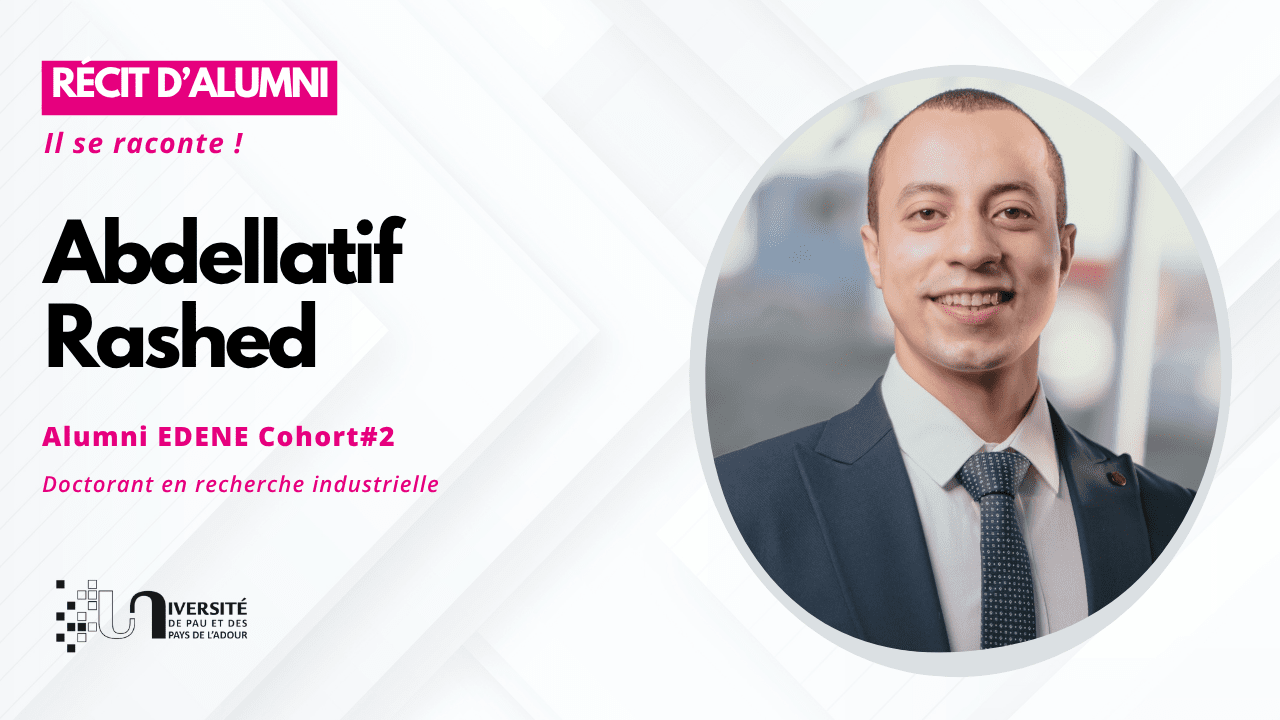
I received my B.Sc. and M.Sc. degrees in Electrical Engineering from Tanta University, Gharbiya, Egypt, in 2018 and 2023, respectively. In 2019, I joined Tanta University as an Instructor and was later promoted to Assistant Lecturer in 2023. My M.Sc. research, conducted over three years, focused on the development of a novel optical sensor for liquid dielectrics. I was particularly interested in the interdisciplinary nature of the work and its strong connection to a real industrial challenge. During this period, I conducted research at the High Voltage and Superconductivity Laboratory at Tanta University and the energy materials lab at Japan University Of Science & Technology where we developed and patented an innovative sensor based on carbon dots (CDs). The findings of this research were subsequently published in early 2024. In addition, I completed a semester in physics at the University of Cantabria in Santander, Spain, through the Erasmus+ KA-107 Scholarship program during my master’s studies. Following the successful completion of my degree, I became increasingly motivated to pursue a Ph.D. aimed at solving real-world industrial problems within an interdisciplinary research environment. This ultimately led me to join the EDENE program at UPPA.
I am currently nearing the completion of the second year of my Ph.D. at UPPA and preparing to begin my industrial secondment at Safran Tech in Paris next month. My research is notably interdisciplinary, bridging the fields of high voltage engineering and chemistry to contribute to the advancement of electric mobility. Working across three laboratories—SIAME at UPPA, LGP in Tarbes, and CIRIMAT in Toulouse—has been both challenging and rewarding. Moreover, being part of the EFICIENCE Chair, led by Prof. Paul-Etienne Vidal, has greatly facilitated collaboration between the laboratories and advanced our research. The environment has been incredibly supportive, from the international office to the engineers at the SIAME laboratory. Integrating into the community was made easy thanks to the welcoming attitude of everyone involved. Overall, I am truly grateful for the intellectually stimulating research journey so far and for the supportive environment provided by my supervisors, engineers, and fellow researchers.
Since my Ph.D. focuses on addressing an industrial problem, I am increasingly inclined to pursue a career in industry after completing my doctorate. One of the most valuable aspects of the EDENE program, in my view, is its ability to bring together multiple partners from both research institutions and industry. This has created a vibrant research environment with strong industrial ties. Moreover, the program's organizational structure and the dedicated team supporting each EDENE fellow have been instrumental in helping us find industrial mentors and secure meaningful secondments. This reflects the significant effort and vision behind the program.
About the EDENE doctoral programme
The EDENE doctoral programme, funded by the European H2020 Marie Skłodowska-Curie COFUND initiative and managed by the University of Pau and Pays de l’Adour (UPPA), aims to train international researchers in the fields of energy and the environment. By promoting an interdisciplinary, intersectoral, and international approach, the programme helps strengthen the impact of research on these major challenges. Between 2021 and 2026, 30 high-potential international PhD candidates were recruited, bringing substantial added value to scientific and technological innovation in these strategic areas.

Comments0
Please log in to see or add a comment
Suggested Articles