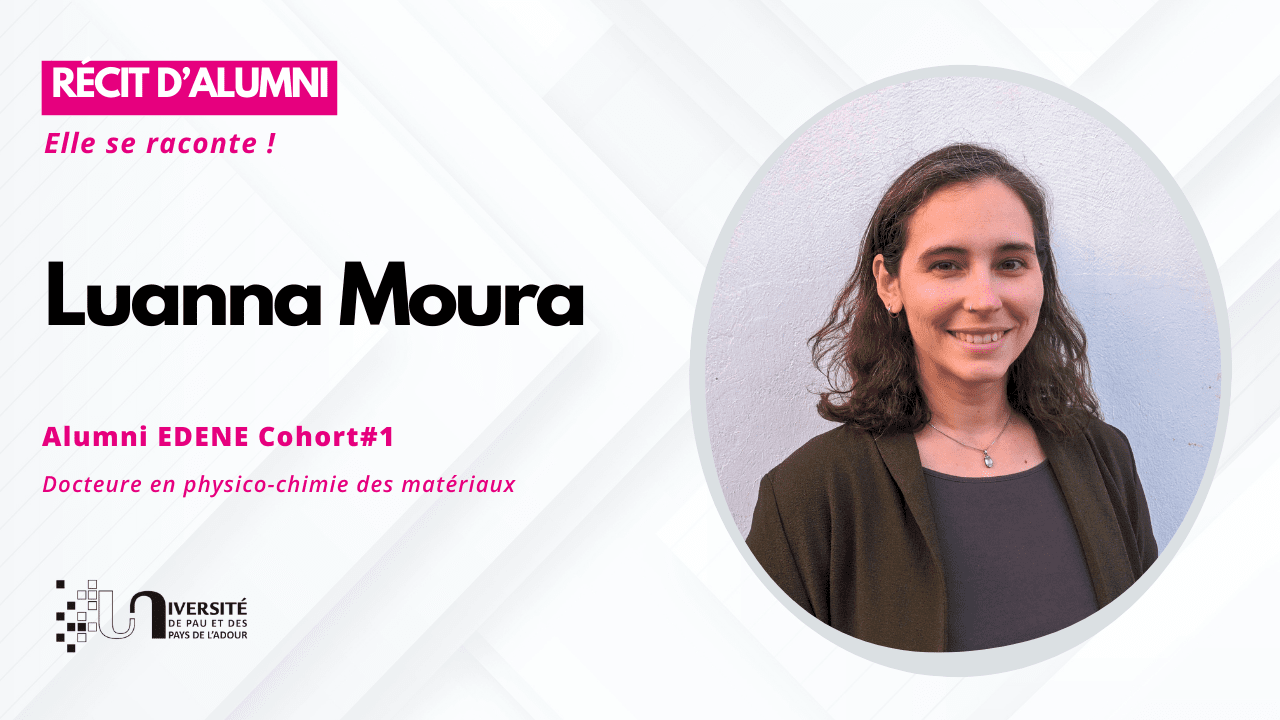
Luanna Moura, PhD in Physical-Chemistry of Materials, EDENE Cohort#1 Alumni

Short testimonial
My PhD journey within the EDENE programme at UPPA was both rich and transformative. Coming from a background in geology and materials engineering, entering the field of physical chemistry of materials posed exciting challenges. My research focused on developing bio-sourced hydrogels for agriculture—materials to improve soil water retention and offer sustainable alternatives to synthetic polymers. I worked with lignin, polysaccharides, and biochar, exploring how naturally variable resources can still yield robust, functional materials. Over time, I shifted from seeking strict reproducibility to embracing variability as a scientific strength. This perspective shaped how I approach research and see my role as a scientist.
EDENE added great value to this journey, encouraging interdisciplinary exchange, transferable skills, and cultural integration. The network of PhD peers made a solitary process more collaborative. As an international researcher, I found strong support in the programme’s structure and in UPPA’s welcoming environment. The university's human side stood out—I was always met with kindness and respect, and my presence felt genuinely valued.
Throughout the PhD, I developed strong scientific and professional skills. I grew in resilience, learned to adapt methods to complex materials, troubleshoot creatively, and use new tools. I refined my data analysis and became more confident in communicating complex ideas to different audiences. Transferable skills like project and time management, critical thinking, and teamwork were key gains. Working in a multicultural setting strengthened my interpersonal and cross-cultural communication, making the experience truly enriching.
Your doctoral journey
What are you most proud of in your doctoral journey?
I’m proud of how I adapted my mindset. Faced with methodological limits, I reassessed my goals and embraced the variability of bio-based materials instead of pursuing perfect reproducibility. Staying true to my values—hands-on, applied science with practical impact—was essential.
What were the main challenges you had to overcome?
A major challenge was managing frustration with non-reproducible results in a field that values standardization. Balancing scientific rigor with my desire for real-world impact was not easy. The human challenge was also real: staying motivated while adjusting to a new culture and facing uncertainties about the future.
Your experience at UPPA
How did you experience your PhD journey at UPPA and within the EDENE programme?
While the PhD process can be isolating, EDENE offered strong support and helped create a sense of community. Sharing experiences with peers made a big difference. UPPA’s staff and facilities were consistently supportive, especially as I navigated an unfamiliar academic system. Overall, the experience was rewarding—both professionally and personally.
What skills did you develop over the years (scientific, transferable, interpersonal…)?
I gained broad technical and interpersonal skills. I deepened my knowledge in hydrogel synthesis and characterization, honed problem-solving and communication, and grew through hands-on lab work. I also developed critical thinking, time management, and collaboration skills, especially through working with a diverse cohort of researchers. The EDENE programme played a big part in this by fostering an environment of mutual support and exchange. My PhD at UPPA equipped me with competencies that I carry forward.
Your career perspectives
I am now seeking a position in research and development in the private sector—a longstanding goal. I’m drawn to its fast-paced, applied nature. My academic background, combined with the insights and mindset gained during my PhD, prepares me to contribute to innovative, real-world solutions.
What advice would you give to a young PhD graduate entering the job market?
To new PhD graduates: value everything you’ve learned, not just the technical skills, but also your perseverance, creativity, and communication. It’s okay to feel uncertain; this phase is part of your growth. Stay curious, be open to unexpected paths, and connect with other, many opportunities come from informal conversations. You’re not alone.
Want to know more?
The EDENE doctoral programme, funded by the European H2020 Marie Skłodowska-Curie COFUND initiative and managed by the University of Pau and Pays de l’Adour (UPPA), aims to train international researchers in the fields of energy and the environment. By promoting an interdisciplinary, intersectoral, and international approach, the programme helps strengthen the impact of research on these major challenges. Between 2021 and 2026, 30 high-potential international PhD candidates were recruited, bringing substantial added value to scientific and technological innovation in these strategic areas.

Comments0
Please log in to see or add a comment
Suggested Articles