Ioannis Kanavos, PhD candidate, Analytical Chemist - IPREM, alumni EDENE Cohort#2

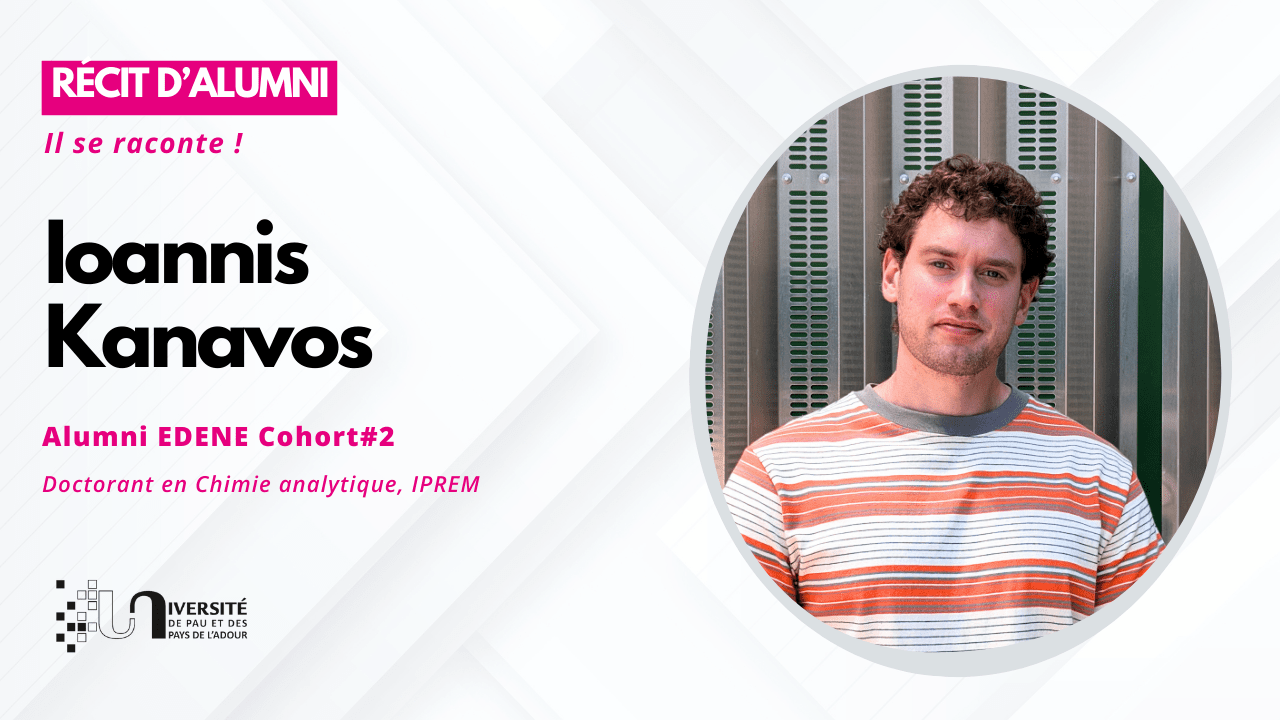
My name is Ioannis Kanavos and I am a PhD candidate in analytical bioinorganic chemistry at the Institute of Analytical Sciences and Physical Chemistry for the Environment and Materials (IPREM), at the University of Pau and the Adour Region (UPPA). My academic and scientific interests lie at the intersection of metal-based therapies, mass spectrometry, and biomolecular interactions. I hold a Master’s degree in Analytical Chemistry and a Bachelor’s degree in Chemistry from the University of Ioannina, Greece. Motivated by the desire to broaden my scientific horizons and to become part of a more international research community, I made the decision to leave Greece and come to France to pursue my PhD within the stimulating and interdisciplinary framework of the EDENE program at UPPA.
PhD Journey:
My doctoral journey has been a comprehensive experience, marked by moments that allowed me to grow both as a scientist and as a person. What I am most proud of over these years is having contributed to original research at the interface of bioinorganic chemistry and advanced analytical techniques—particularly through high-resolution mass spectrometry to study the interactions between therapeutic metal compounds and selenocysteine-containing biomolecules. This is a complex and emerging field, and I am pleased that my work has helped to answer fundamental scientific questions while also showing potential biomedical relevance. Presenting my findings at international conferences and seeing my work published in recognized scientific journals has been extremely rewarding.
Experience at UPPA:
My experience at UPPA and within the EDENE program has been both enriching and professionally transformative. The support structure provided by EDENE—from mentoring to interdisciplinary workshops—has enabled me to thrive not only as a chemist but also as a well-rounded researcher, capable of thinking beyond disciplinary boundaries. UPPA offers a stimulating environment, equipped with cutting-edge infrastructure, and a collaborative culture that encouraged me to continuously push the boundaries of my research. I especially appreciated the academic freedom, while also benefiting from strong guidance from my thesis supervisors and colleagues.
I was also fortunate to work as a visiting researcher in a laboratory abroad (Donostia International Physics Center, Spain), where I was exposed to new techniques such as NMR and photochemistry. This experience broadened my perspective on the possible synergies between chemistry, physics, and other scientific domains. Throughout my PhD, I also engaged in interdisciplinary collaborations, including mentoring students from diverse backgrounds. These experiences enriched my problem-solving skills and strengthened my ability to operate in multicultural research environments.
Career Perspectives:
Being part of the EDENE program, supported by the H2020 MSCA COFUND scheme, has had a significant impact on my career and future prospects. This program not only funded my research but also emphasized skill development, interdisciplinary collaboration, and international openness. It provided me with the confidence and tools to tackle complex scientific challenges and to actively engage with the broader research community. It also nurtured my ambition to pursue a research-oriented career, whether in academia or within a top-tier R&D center, where I can continue to work at the frontier of bioinorganic chemistry and advanced chemical analysis.
Want to know more?
The EDENE doctoral programme, funded by the European H2020 Marie Skłodowska-Curie COFUND initiative and managed by the University of Pau and Pays de l’Adour (UPPA), aims to train international researchers in the fields of energy and the environment. By promoting an interdisciplinary, intersectoral, and international approach, the programme helps strengthen the impact of research on these major challenges. Between 2021 and 2026, 30 high-potential international PhD candidates were recruited, bringing substantial added value to scientific and technological innovation in these strategic areas.

Comments0
Please log in to see or add a comment
Suggested Articles